
Learning to Manage Money Before Living Independently
An Interview with Marley Gang, Program Coordinator at JA San Diego
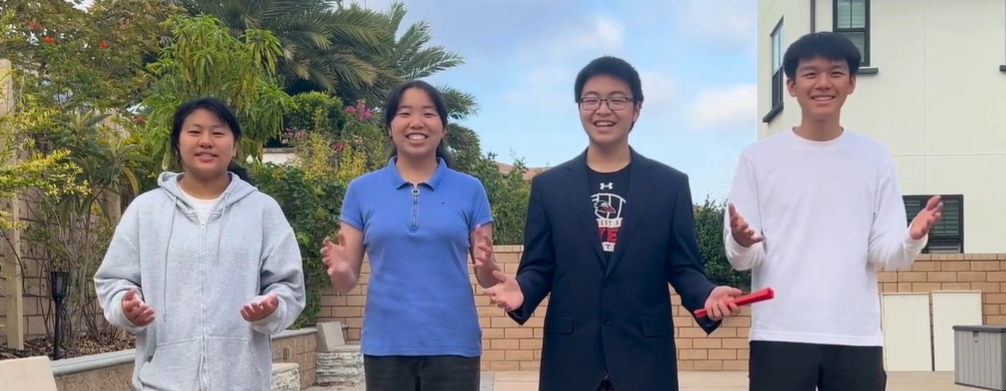
By Yangminxing Wu, Yangminyan Wu
High school students study mathematics, English, and science every day, but do they know how to manage their spending and savings when they receive their first paycheck? And when faced with investment advice on social media, are they able to determine which information is right for them?
These questions are also a focus of Marley Gang's work as a program coordinator at Junior Achievement (JA) of San Diego. Responsible for serving middle and high school students, she collaborates with schools and teachers to integrate financial literacy, entrepreneurial practice, and career readiness into the students' educational experience.
In an interview with Youth of We Chinese magazine, Marley shared her journey from elementary school teacher to working in non-profit education, and discussed the challenges young people face when learning to manage finances, exploring entrepreneurship, and building connections with others. In her view, preparing students for the future requires giving them opportunities for hands-on experience and instilling in them the belief that they can start learning about things they do not yet understand.
From Elementary School Classrooms to Youth Education
Before joining JA, Marley was an elementary school teacher. She first became acquainted with the organization when her school arranged for fifth-grade students to participate in the JA BizTown experience. Her background in San Diego education also familiarized her with the partnerships between JA and local schools. After leaving the classroom, she sought to remain in the field of education and apply her accumulated experience in a new capacity; the direct, tangible connections between JA fosters and teachers and students were a key factor in her decision to join the team. Her current role involves coordinating in-person learning experiences, introducing curriculum resources to teachers, and helping schools integrate these programs into their classrooms. She holds a special regard for the high school years—a pivotal time when students prepare to enter college, vocational training, or the workforce, take on greater responsibilities, and seriously consider the kind of life they wish to lead. Being able to provide resources and support during this stage is one of the reasons she enjoys her work.
The First Major Challenge for Student Entrepreneurs: How to Make Decisions Together
During the interview, the journalist shared his experience participating in the JA Company Program in 2025. Establishing a student company involves tasks such as product development, sales, and other operational activities; however, actual participation revealed that teamwork is often far more complex than initially imagined.
Marley believes that this is precisely where students are most likely to encounter difficulties in the project, and also where they have the greatest opportunity for growth.
Everyone has their own ideas, strengths, and weaknesses. When individuals must collaborate to develop a product or business proposal, they need to learn to listen to others, reconcile differences, and make compromises when necessary. This is particularly true when launching a project from scratch, as the team lacks ready-made answers. Aspects such as the product's design, the feasibility of ideas, and the division of labor among members must be determined gradually through discussion and practical application. Marley notes that while integrating diverse ideas is challenging, the process helps students understand that collaboration entails more than just completing individual tasks; it also involves collectively deciding on the team's next steps.
The Financial Literacy Gap: Knowing It's Important, Yet Not Knowing Where to Start
When discussing the financial knowledge young people lack the most, Marley first pointed to the gap between knowledge and practical application.
She candidly admits that when she graduated from university and began earning a salary, she felt unprepared. Completing one's studies does not automatically provide answers to questions about how to manage incoming funds, how to save, or how to plan for the future. For inexperienced students, the challenges can stem from more fundamental questions—such as understanding what taxes are, what receiving a paycheck entails, and how to allocate one's income. Without explanations of these concepts, it is difficult for students to build confidence in their financial decision-making.
Marley observes that a lack of knowledge and experience can sometimes lead to psychological withdrawal. Students who do not understand a concept now may assume they never will, and consequently become reluctant to engage with the content further. Therefore, she believes that financial education must provide an environment where students feel comfortable asking questions, practicing, and learning. Since credit, debt, and personal finance have a lasting impact on one's life, the earlier students have the opportunity to understand these issues, the better prepared they will be to make real-world choices in the future.
When Dealing with Social Media, It Is Necessary to Cultivate the Ability to Make Independent Judgments
Today, students can easily acquire the content of investing, saving, and making money on social media. But more information does not mean that judgment becomes easier. Marley mentioned that there is a lot of dissent on websites, apps and social platforms. Everyone seems to be telling everyone else how to manage money. Even though one method works well for one person, that doesn't mean it will work for everyone. Faced with this situation, JA's teaching focus is to help students understand different options. For example, banks, credit cards, and loans all have different options. Students need to understand these options so they can make decisions based on their circumstances.
She also points out that financial situations can vary significantly among peers. One high school student might already have a part-time job, while another does not; naturally, their income and spending patterns differ. Future plans and personal goals also influence how they manage their money.
Therefore, simply following the practices of friends or people online—without considering differences in actual circumstances—can lead to overlooking important nuances. It is precisely this ability to make independent judgments that financial education aims to help students develop.
Giving Students Room to Explore Between Family Expectations and Personal Interests
For young people in some immigrant families, career choices also involve family expectations. Family members may prioritize stability, whereas the students themselves wish to explore entrepreneurship or other unfamiliar paths.
In addressing this issue, Marley believes that family and upbringing do indeed shape a person's perspective on the future. JA offers opportunities for exploration that are supportive and entail relatively limited risk; the Company Program is one such example. Students are required to commit seriously and experience the process of building a business, yet they do not have to—like actual entrepreneurs—invest their entire life savings into a venture with an uncertain outcome.
She also highlighted the simulated stock market activity and the budgeting experience at Finance Park. Through these programs, students can practice managing expenses, comparing options, and understanding the consequences of their decisions without having to immediately bear the cost of real-world financial mistakes. Participating in such activities does not imply that everyone must ultimately choose to start a business; some students might discover they do not enjoy running a company, while others may confirm their interest in doing so. Either outcome helps them gain a better understanding of themselves.
Make Financial Education a Worthwhile Investment of Time
During the interview, the journalist drew upon the FinTalk Youth Financial Literacy Promotion Project (FTFPP)—an initiative he launched—to highlight a challenge encountered during the promotion process: some students and parents prioritize traditional academic subjects, placing relatively less emphasis on financial literacy.
Drawing on experiences collaborating with schools, Marley discussed similar difficulties regarding curriculum scheduling. Schools must prioritize allocating time and resources to existing compulsory subjects; consequently, even when they recognize the value of financial education, they still face the challenge of determining where to fit it into the curriculum.
She explained that the "Company Program" might be integrated into business, economics, or mathematics classes—or even offered as an elective—depending on the school. For those responsible for promoting the curriculum, securing the right placement within the academic schedule is a crucial step toward successfully introducing the program into schools. As for justifying the need for financial education, her answer was straightforward: regardless of their future careers, everyone has to deal with money. Income, consumption, and saving are part of everyone's life. Since students will inevitably face these issues, there is every reason to provide them with opportunities to learn and practice before they become independent.
How to Get Busy High School Students Willing to Participate?
Recognizing the importance of financial education does not guarantee that students will sign up for the program. High school students' time is already consumed by homework, extracurricular clubs, part-time jobs, and other commitments; consequently, figuring out how to attract their participation is a challenge FTFPP must address as it develops.
Marley frankly admits that this is also a practical challenge JA faces.
She explained that JA typically reaches students through teachers or school administrators. Partnering with schools provides stable organizational support for the programs and allows activities to take place in a learning environment with which students are already familiar. At the same time, student initiative plays a crucial role. Marley noted instances where schools had no prior relationship with JA, but students proactively contacted the organization to express their interest, thereby facilitating further communication between JA and the school's teachers or administrators. In this way, students serve as the starting point for bringing the program into the school.
In her view, earnestly listening to these students' ideas and supporting those willing to commit long-term can help a project gradually grow. When other students see their peers seriously organizing activities, they are also more likely to become interested in learning more and getting involved.
From a Philanthropic Idea to a Project Capable of Sustained Operation
The journalist also discussed the hope of further developing educational initiatives like FTFPP through the study of economics and asked how such knowledge could facilitate social entrepreneurship. Marley noted that having an idea is one thing, but putting it into practice is quite another; projects require a solid financial foundation to transform plans into concrete action.
In her response, she also touched upon aspects such as supply and demand, production, marketing, R&D, and logistics. She believes that understanding the interplay between these elements—and how different organizations collaborate or compete—helps entrepreneurs make more comprehensive judgments. For young people aspiring to provide long-term educational services, it is essential not only to focus on the specific problem the project aims to solve but also to consider how to organize operations, sustain the venture, and build connections with the community. What Marley emphasizes is precisely the construction of the theoretical framework needed to turn ideas into reality.
What Does "Social Capital" in JA Fellows Mean?
When discussing the "social capital" emphasized by JA Fellows, Marley describes it as a person's "social ties"—encompassing both professional connections and personal acquaintances. Guest speakers who visit the classroom, presenters at career events, or even neighbors who run their own businesses can all help students gain insight into an industry and offer advice when needed. She believes it is crucial for high school students on the verge of entering college or the workforce to know reliable, respected individuals; such connections not only grant them access to a wealth of experience and resources but also provide them with mentors to turn to when they are uncertain about their next steps.
Building connections can start with simple, everyday interactions. Listen carefully when others describe their work, and remember their names. Being willing to initiate conversation is something students can practice right now.
Advice for High School Students: Don't Hold Back from Asking Questions Just Because You're Afraid of Asking the Wrong Thing
For students wishing to enter the fields of business or finance but unsure where to begin, Marley advises them to take the initiative and ask questions—without worrying about whether those questions seem too basic. She suggests reaching out to relatives who work in accounting or chatting with local café owners to learn how they launched their businesses. Through such concrete interactions, students can gradually discover their likes and dislikes, as well as the working styles that suit them best. Asking questions also demonstrates one's curiosity and willingness to learn. Even without extensive experience, students can start by engaging with the people around them to gain insight into what real-world work entails.
As the interview drew to a close, Marley reiterated the support JA aims to provide young people: helping them access reliable resources so they can approach personal finance, entrepreneurship, and future choices with greater confidence and capability. For high school students still exploring their paths, getting started doesn't require knowing everything beforehand; a single hands-on project, a conversation with others, or a thoughtful question can all serve as a starting point for learning.